
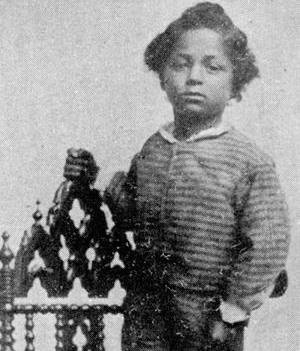
On February 14, 1864, Varina Davis was walking home at night when she saw a small Black boy of around eight years of age being physically assaulted, either by an older Black woman, or a gang of Black men, depending on which version we read.
She took the boy, who identified himself as Jim Limber and gave him some of the clothes belonging to her deceased son Joseph, who was approximately the same size.
Jefferson Davis himself soon came home, saw the boy, and instantly accepted him as his own.
And so it goes that the home of the President of the Confederacy of the United States was caring for a Black youth amidst the height of the bloodiest war in North American history.
According to various biographies, he was treated well by the Davis family, who saw him the same way as their biological offspring, despite some bizarre comments from Varina, who remarked that Limber made a “great pet in the family”.
Limber had his own bedroom, clothes, meals, and even some access to education intended to get him to learn a new trade so that he could eventually earn a living and move out.
This odd relationship lasted for more than a year before the frontlines of the American Civil War literally came knocking at their doorsteps when the Federal Army descended on Richmond, forcing the entire Davis family including Limber to flee from Virginia.
On May 15, 1865 — 456 days after first meeting — Union troops captured them at Irwinville, Georgia and quickly separated them from Limber, whom they saw as an emancipated Black person.
Jefferson Davis never saw his Black son again.
Whether he made a concerted effort to relocate him after the war depends on which biography we go by.
Either way, this story is all the more intriguing and ironic when the historical context of the period comes into play, and is a topic that should warrant further studying when delving into the complicated human nature that tends to contradict itself at the most unexpected times.
2008 statue showing Jefferson Davis with his biological son Joseph and his adopted son Jim on the property of his last residence