
Dr. Frank Mayfield was visiting the Tewksbury Institute when, on his way out, he accidentally bumped into an elderly cleaning lady. To make conversation, he asked, “How long have you worked here?”
“I’ve worked here almost since it opened,” she said.
“What can you tell me about the history of this place?” he asked.
“I don’t know much,” she said, “but I can show you something.”
She led him down to the basement under the oldest part of the building and pointed to a small, rusted cell. “That’s where they used to keep Annie Sullivan,” she said.
“Who’s Annie?” he asked.
The maid explained that Annie was a young girl who had been brought there because no one could control her. She screamed, bit, and threw her food. The doctors and nurses couldn’t even examine her.
“I was just a few years younger than Annie,” the maid said. “I used to think, ‘I’d never want to be locked in a cage like that.’ I wanted to help her, but if the doctors couldn’t, what could I do?”
“One night I baked some brownies after work. The next day, I put them outside her cage and said, ‘Annie, I made these for you. You can take them if you want.’ Then I walked away, afraid she’d throw them. But she didn’t. She took the brownies and ate them. After that, she was a little kinder to me. I started talking to her, and one day, I even made her laugh.”
“One of the nurses saw this and told the doctor. They asked if I’d help them with Annie. So whenever they needed to see her, I went in first to calm her, explain things, and hold her hand. That’s when they discovered Annie was almost blind.”
After a year of slow progress, Annie was sent to the Perkins Institute for the Blind, where she learned to read, write, and later became a teacher herself.
Years later, Annie came back to Tewksbury to visit and help. The Director told her about a letter he had just received from a desperate father. His daughter was blind, deaf, and thought to be “crazy.” He didn’t want to send her to an asylum and asked if anyone could come teach her.
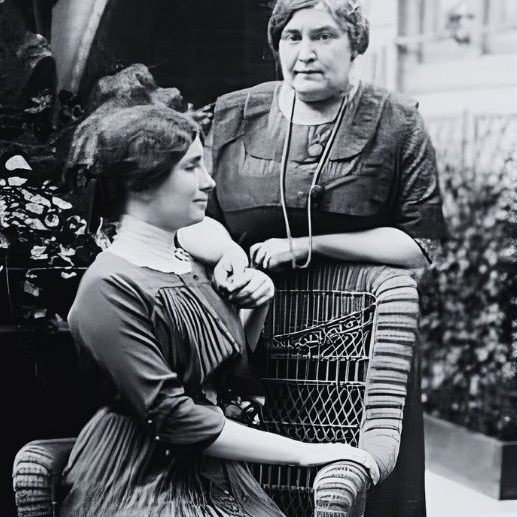
That’s how Annie Sullivan became the lifelong teacher and companion of Helen Keller.
When Helen Keller later received the Nobel Prize, she was asked who had most influenced her life. She said, “Annie Sullivan.”
But Annie replied, “No, Helen. The woman who changed both our lives was a maid at Tewksbury who once brought a little girl some brownies.”