
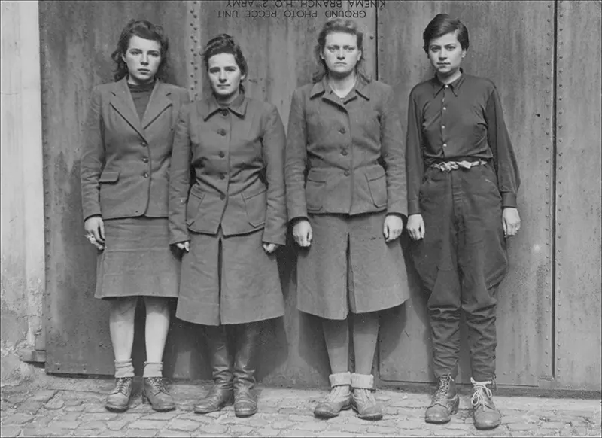
Mostly people make the mistake that these women had been kidnapped and shot in silence. The truth about the period has a more complex nature as my research demonstrates. The Allies insisted on due process, although these women did indeed commit really evil acts. They had the desire to show their moral superiority over the Nazis, and thus they looked at the legal system instead of taking revenge.
Take the case of Irma Grese the so-called Beast of Belsen. She was a very vicious inmate despite her young age. It took a long trial in 1945 before she was executed. Her survivors were forced to enter a court to give their testimonies. She finally found herself being the youngest woman to be executed under the British law in the twentieth century, but after every other piece of evidence was weighed in.
Similar trend occurred in Poland where Stutthof trials were held with guards like Jenny-Wanda Barkmann. Her execution in public in 1946 came after weeks of court proceedings.
Allies were following this strategy to establish a lasting history. They felt that the future generations would not accept the holocaust since they did not have formal paperwork about it. Moreover, they had to take information out of these guards to find other war criminals. Surprisingly, most of the lower-level guards served short prison sentences because judges required the unquestionable evidence to pass the death sentence.