
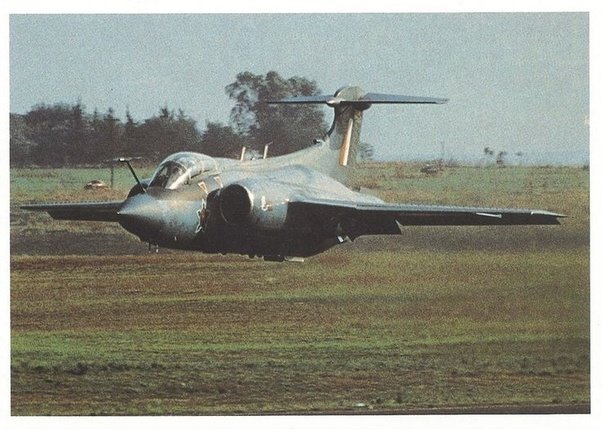
It’s a bit of a joke, but the Blackburn Buccaneer is the only airplane that descends into operating altitude after takeoff. Many combat airplanes during the middle of the Cold War were explicitly designed for tree-top flying. While they use up more fuel and can’t fly as fast due to the high air density, it minimizes the range when they would be picked up by enemy radar, first by hiding them beneath the horizon and later on by making them hard to pick up against ground clutter (radar reflection from the water or ground).
The only obstacles for low flying are exactly what you expect: trees, terrain, buildings, powerlines, and even ocean waves. Some airplanes like the F-111 above have computer assistance to help the pilot navigate and evade terrain, which can be useful in low light or bad visibility. Modern cruise missiles also have this feature while many airplanes at least have a warning system alerting the pilot they’re getting too close to the surface.
A special class of airplanes designed to “float” just above the surface are ground effect vehicles. Airplanes of all kinds get extra lift when they’re less than one wingspan above the ground (as a rule of thumb). GEVs use this to their advantage to lift bigger and heavier airplanes than what is normally possible (and with less wing area). They’re better on paper than in reality, with the vast majority of GEV projects failing to produce a working vehicle since they rely on calm surface to work.